
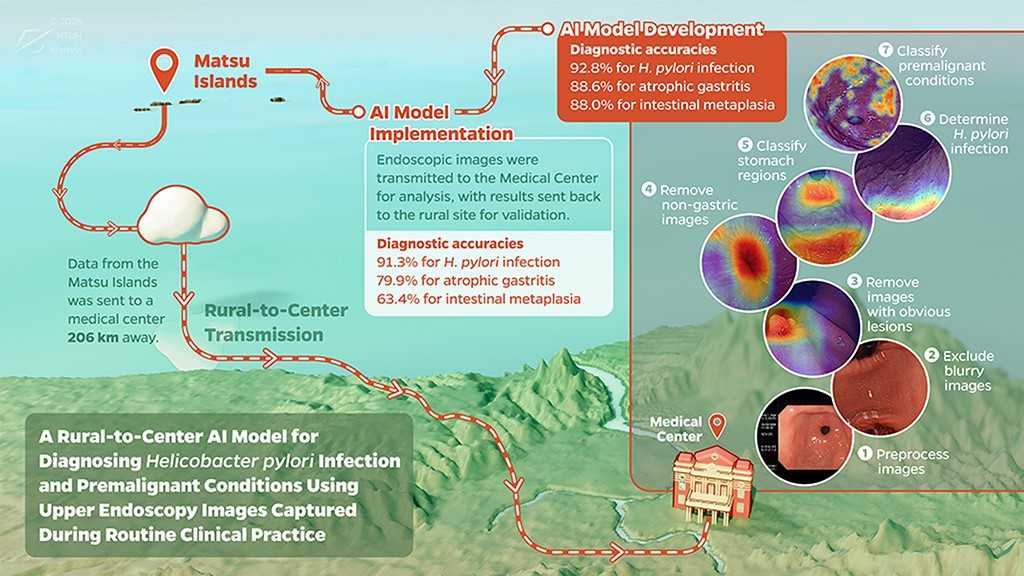
| Technical Name | Deep Learning-Assisted Diagnosis of Helicobacter pylori Infection, Precancerous Gastric Lesions, and Gastric Cancer Risk Using Routine Upper Endoscopy Images | ||
|---|---|---|---|
| Project Operator | National Taiwan University | ||
| Project Host | 李宜家 | ||
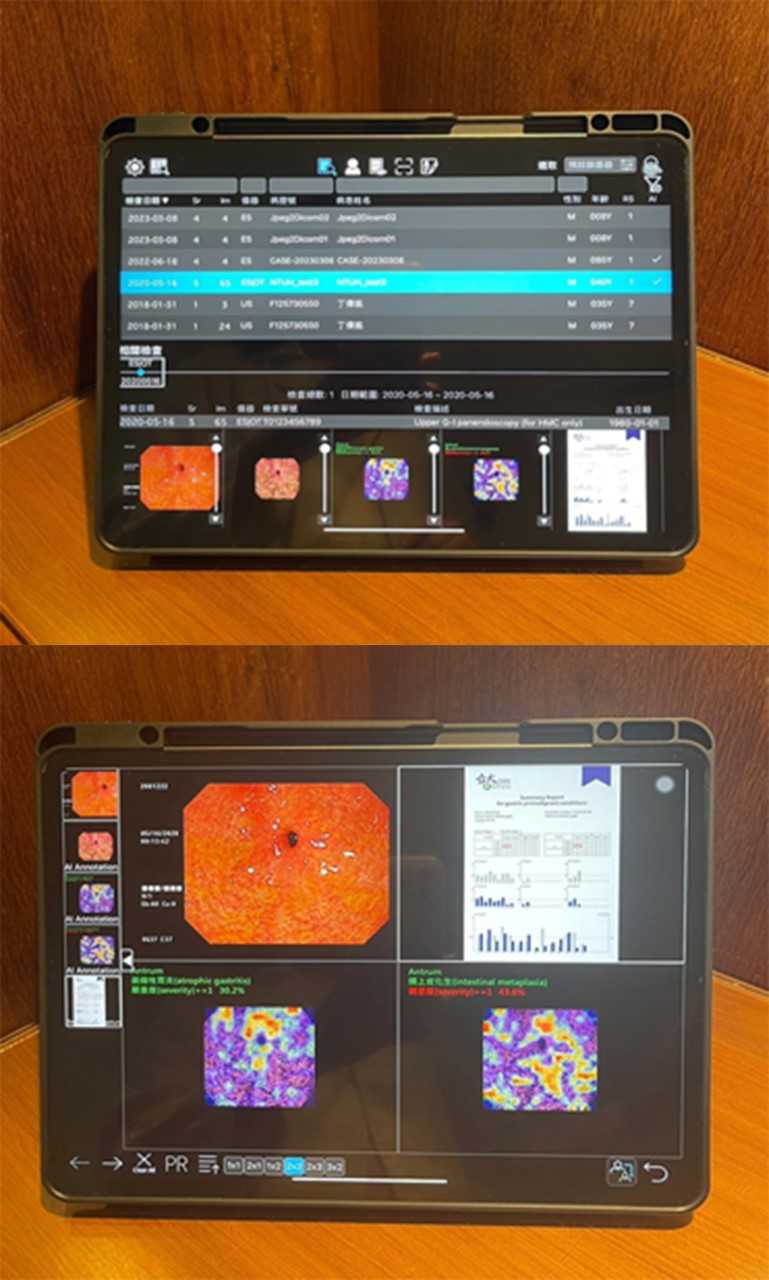
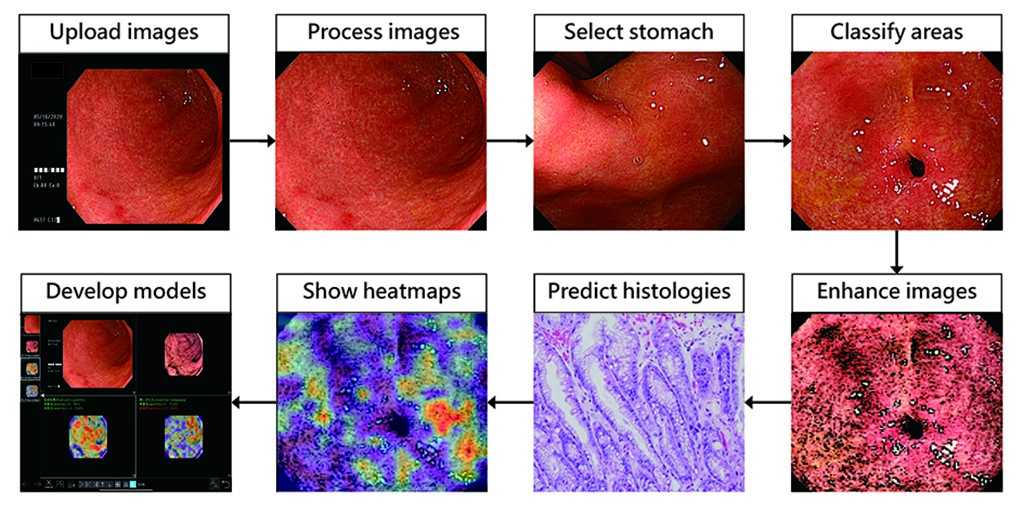
| Summary | Upper endoscopy is a widely used screening tool. However, findings are often reported simply as “gastritis,” without scientifically grounded evaluation. Large volumes of images are stored without effective utilization. Helicobacter pylori infection is frequently overlooked, and precancerous lesions are not assessed. This deep learning system can assist in detecting H. pylori infection and precancerous gastric conditions, supporting appropriate follow-up management and clinical recommendations. |
||
| Scientific Breakthrough | This technology establishes a bundled AI system that automatically interprets routine upper endoscopic images to detect Helicobacter pylori infection, atrophic gastritis, and intestinal metaplasia, and generates a gastric cancer risk score. The model was validated across different settings, achieving a high accuracy. Compared with traditional approaches that focus on detecting focal lesions, this system evaluates the overall gastric mucosal pattern, provided a global stomach health assessment. |
||
| Industrial Applicability | Helicobacter pylori screening has been adopted as the national preventive health strategy in Taiwan and promoted worldwide for gastric cancer, making upper endoscopic imaging highly prevalent, with gastritis being a common diagnosis. Through integrating deep learning technologies, this innovation is developed into a practical, real-world solution, with feasibility already demonstrated in different settings. The system can provide rapid results and enabling efficient use in clinical practice. |
||
- Contact
- Yi-Ru Chen
- yiruchen@ntu.edu.tw
other people also saw