
| Technical Name | From Carbon Capture to Energy Storage: CO₂-Derived Biomass Porous Carbons for Sustainable Supercapacitors | ||
|---|---|---|---|
| Project Operator | National Tsing Hua University | ||
| Project Host | 林建宏 | ||
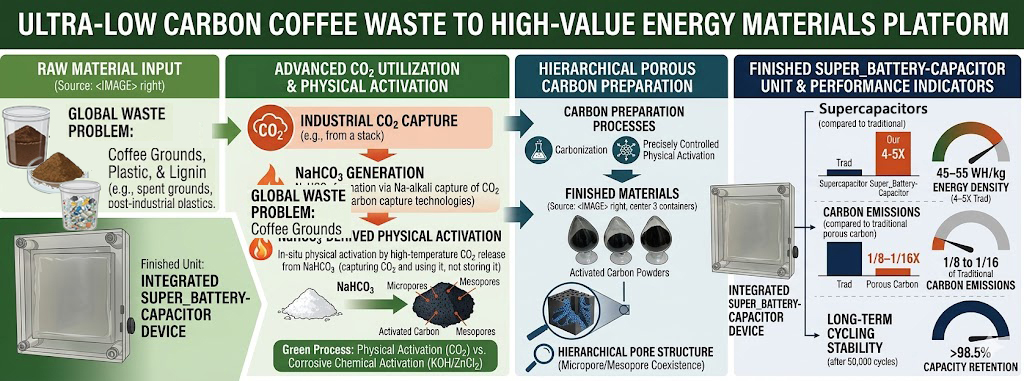
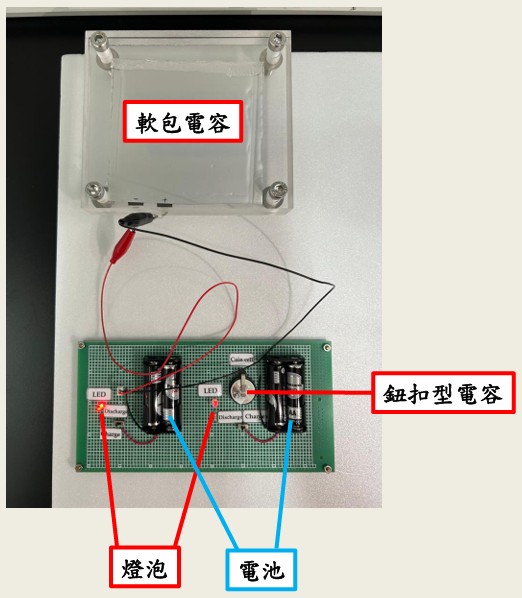
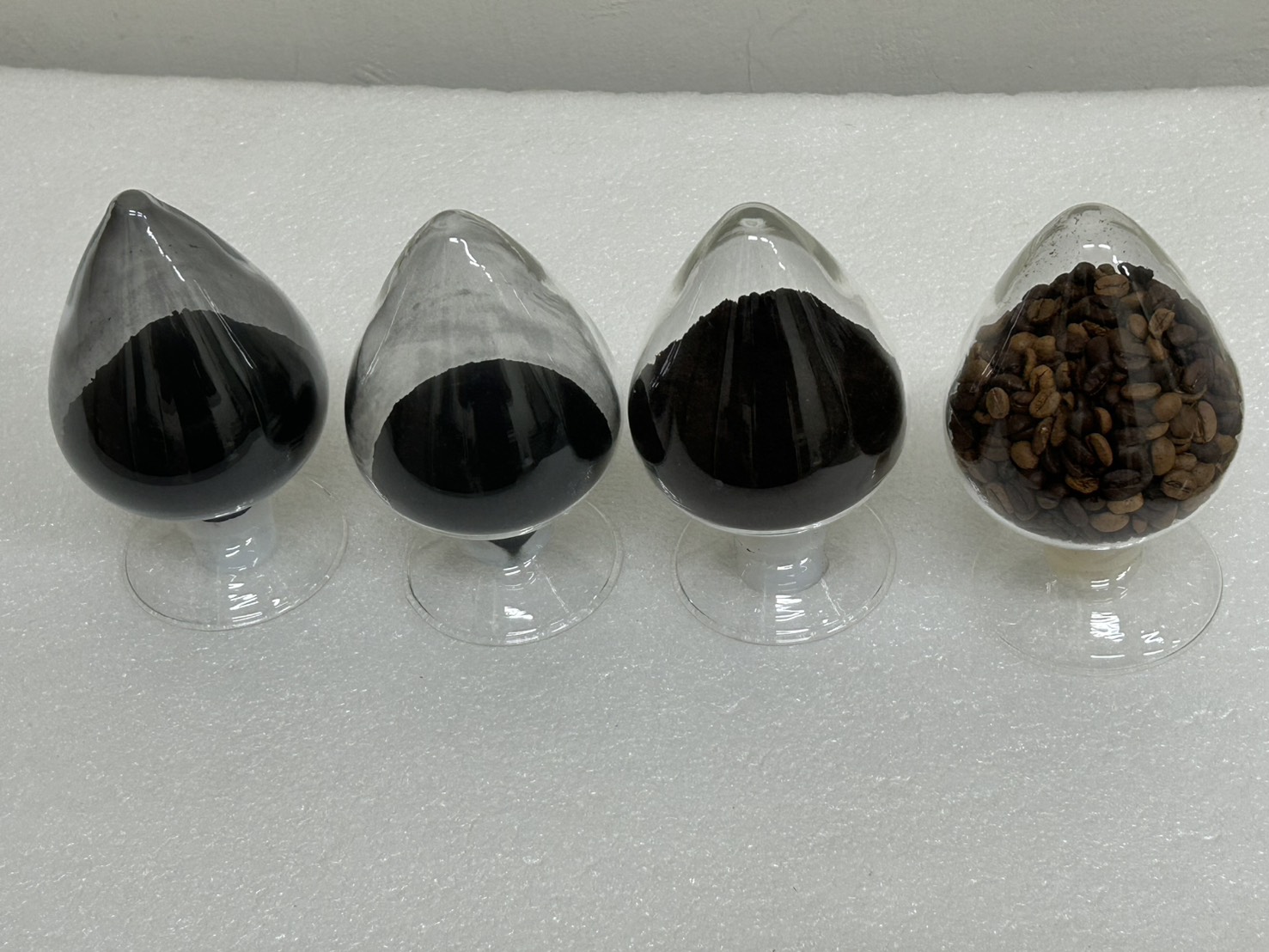
| Summary | With the global shift toward net-zero emissions and renewable energy, this study converts biomass wastes into high-performance porous carbon through high-temperature pyrolysis and CO₂ physical activation. The process avoids corrosive chemicals, reduces wastewater, and enables pore structure control for supercapacitors and sodium-ion batteries, offering a sustainable pathway for green energy storage materials. |
||
| Scientific Breakthrough | This technology integrates CCU, biomass waste upcycling, and porous carbon fabrication into a sustainable low-carbon platform. CO₂-derived NaHCO₃ serves as an eco-friendly physical activation agent to produce hierarchical porous carbons with high surface area and excellent conductivity for high-performance supercapacitors, enabling carbon reduction, waste valorization, and advanced energy storage. |
||
| Industrial Applicability | This technology establishes an innovative C2V model integrating carbon capture, resource circularity, and energy storage. Using low-pollution in situ physical activation, CO₂ and biomass wastes are converted into high-value porous carbons for supercapacitors and sodium-ion batteries. With zero chemical wastewater, strong carbon-reduction benefits, and compatibility with existing equipment, it shows strong global green energy potential. |
||
- Contact
- Chia-Wei, Wu
- WUCW@mx.nthu.edu.tw
other people also saw