

| Technical Name | MK53 Peptide: Innovative Translational Applications for Type 2 Diabetes Mellitus and Its Comorbidities | ||
|---|---|---|---|
| Project Operator | National Cheng Kung University | ||
| Project Host | 孫宏羽 | ||
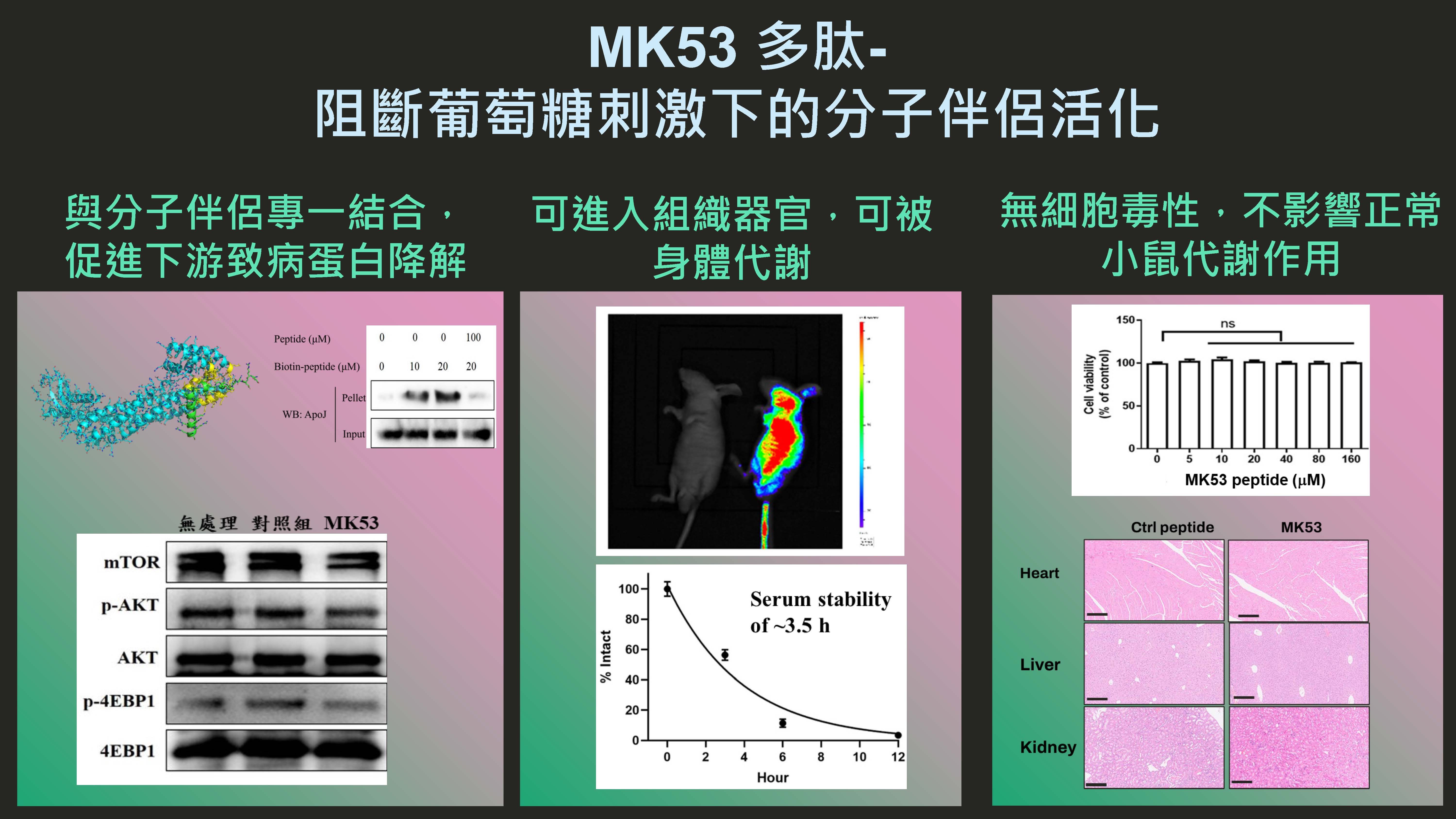
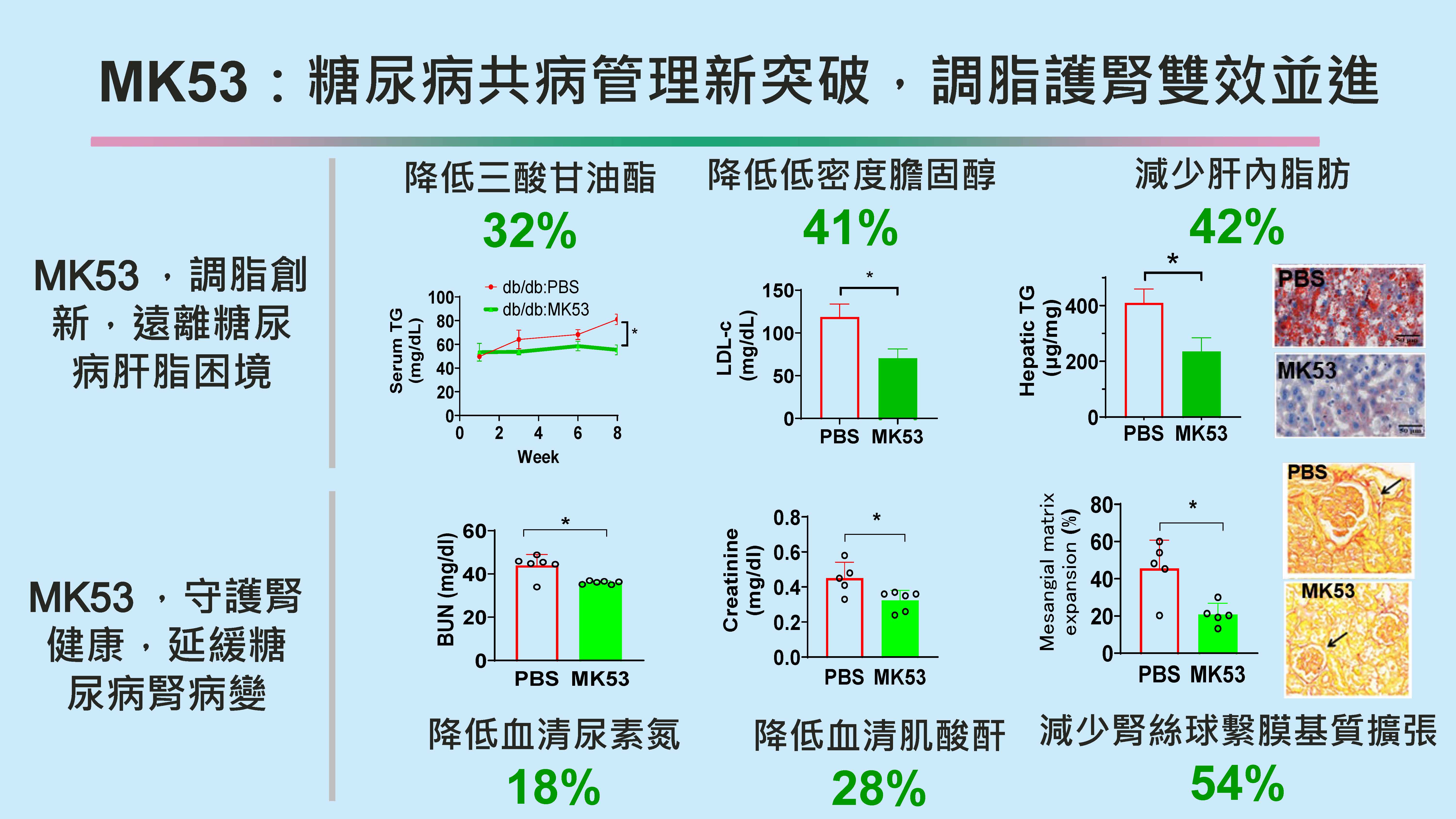
| Summary | MK53 is a novel, self-developed peptide designed to rectify metabolic imbalances by antagonizing ApoJ’s chaperone activity. MK53 facilitates the degradation of pathological proteins and restores lipophagy. Preclinical data confirm its efficacy in lowering blood glucose, improving insulin sensitivity, and mitigating hepatic/renal lipotoxicity. With a high-purity synthesis platform and multi-national patents, MK53 offers high potential for both injectable and oral drug development. |
||
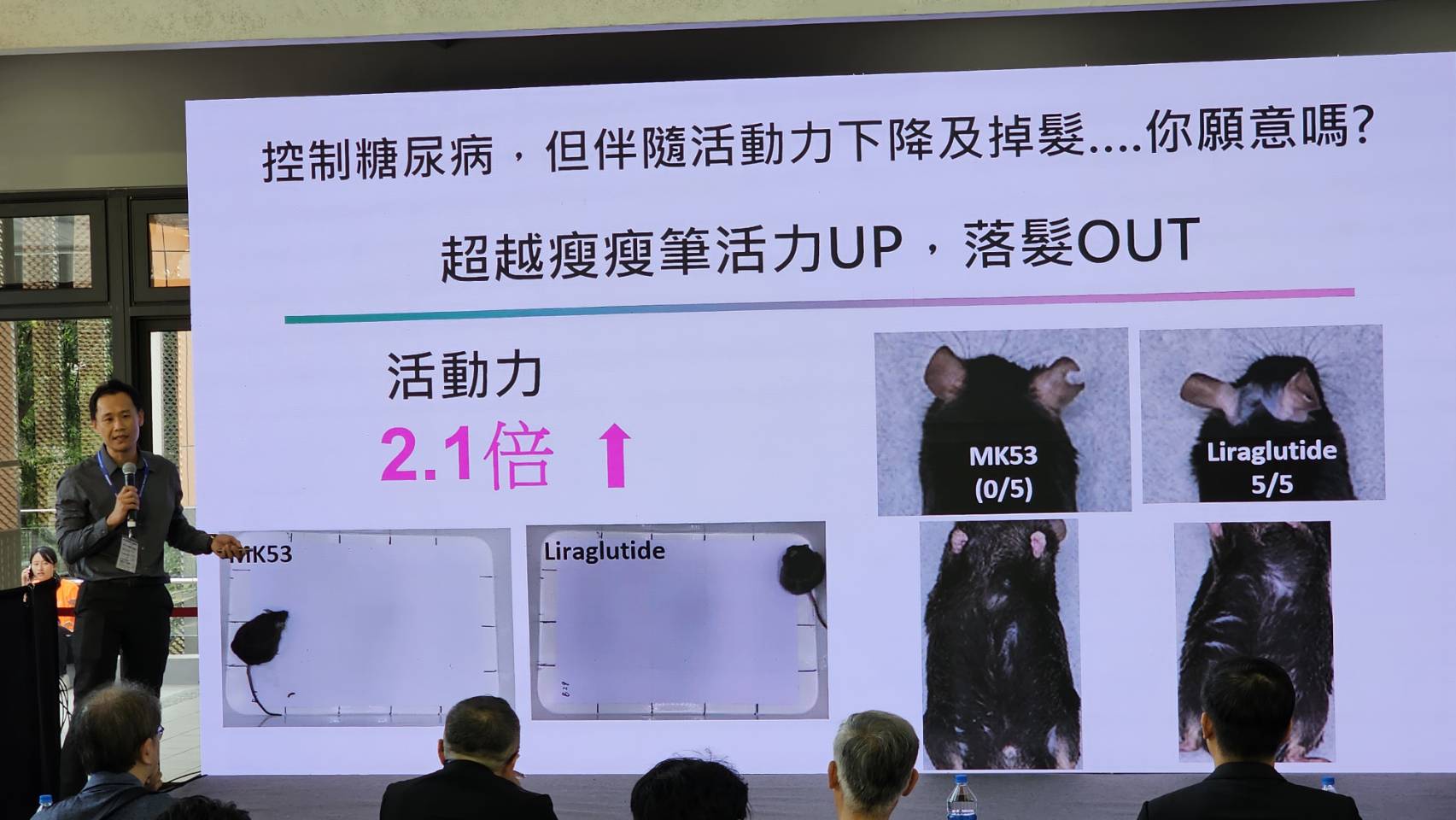
| Scientific Breakthrough | MK53 is the first therapeutic agent targeting ApoJ, transcending traditional GLP-1 pathways to restore homeostasis via lipophagy regulation. It provides multi-organ protection, simultaneously treating diabetes and diabetic comorbidities, without deleterious hair-loss side effects, while enhancing vitality by 2.1-fold. With low-cost yeast production and top-tier journal recognition, its high specificity and market differentiation establish a new benchmark for integrated metabolic the-rapy. |
||
| Industrial Applicability | MK53 targets critical clinical gaps in integrated metabolic therapy through its pioneering ApoJ modulation mechanism, fundamentally addressing comorbidities like T2DM, NAFLD, and nephropathy. Demonstrating robust preclinical translational energy and precision medicine value, its market potential spans high-growth sectors, including biopharmaceuticals, chronic care, and metabolic health mana-gement systems. |
||
- Contact
- Hung-Yu Sun
- hysun@gs.ncku.edu.tw
other people also saw