
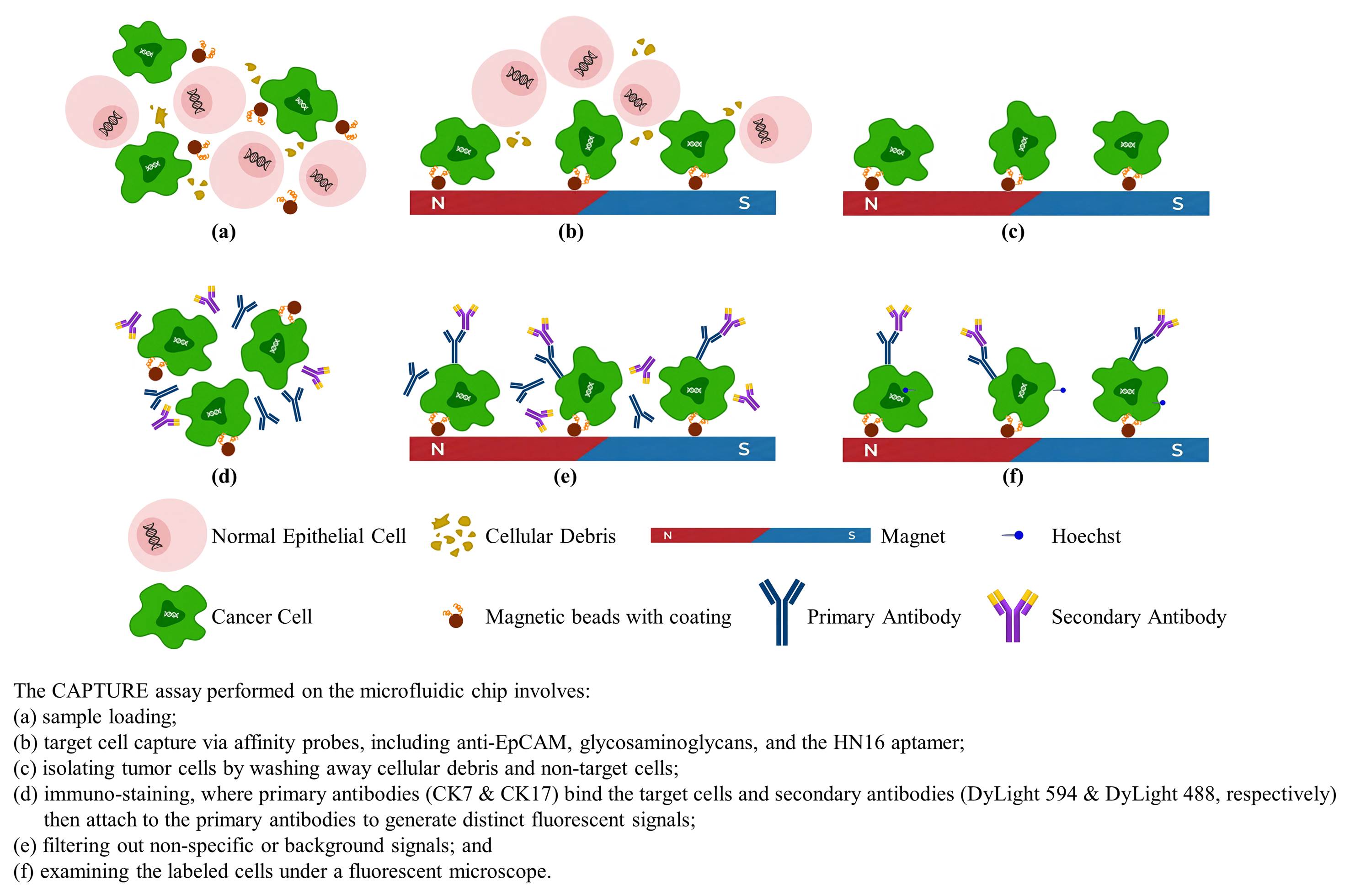
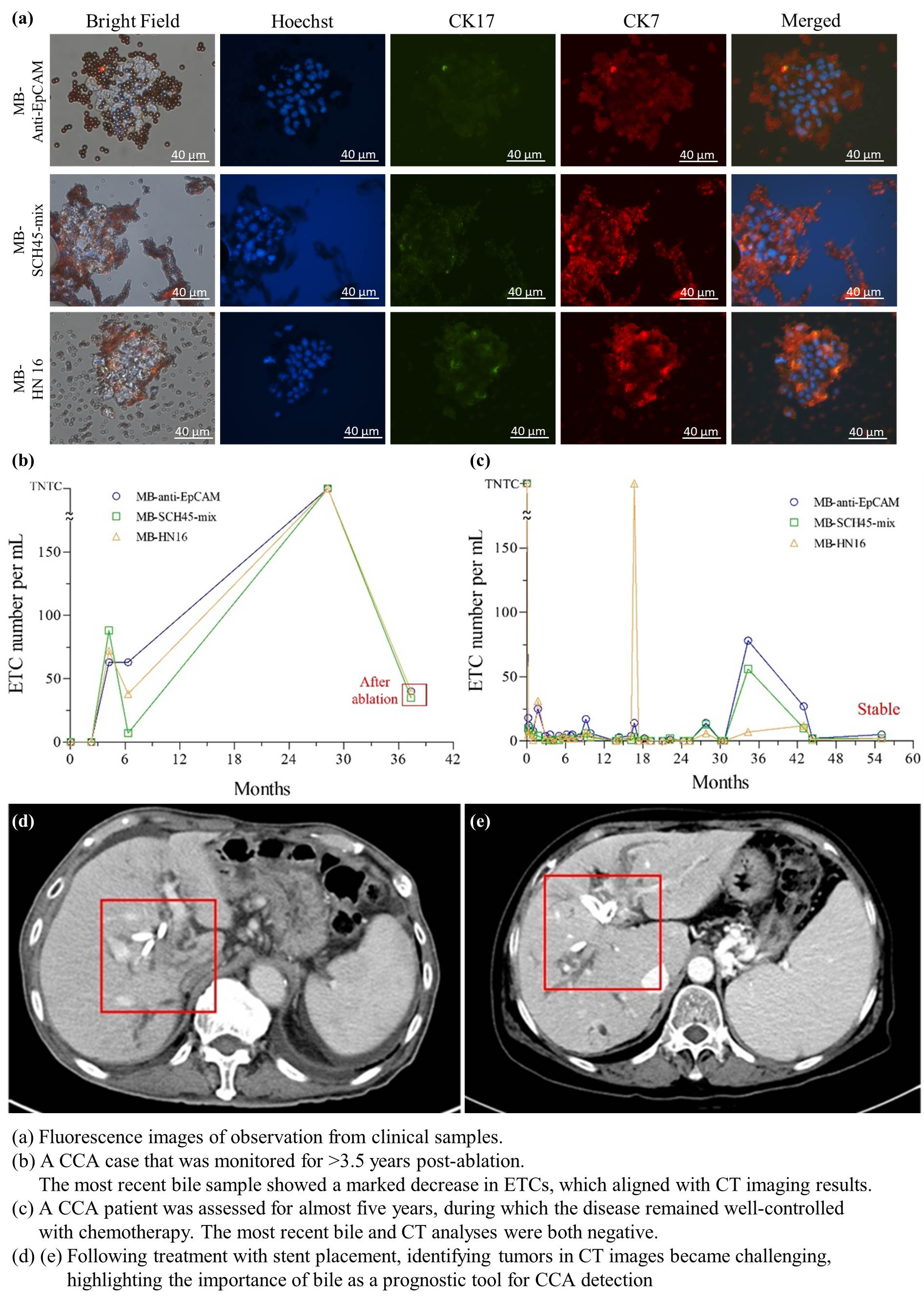
| Technical Name | An automated microfluidic system for detecting cholangiocarcinoma cells in bile for early diagnosis and prognosis | ||
|---|---|---|---|
| Project Operator | National Tsing Hua University | ||
| Project Host | 李國賓 | ||
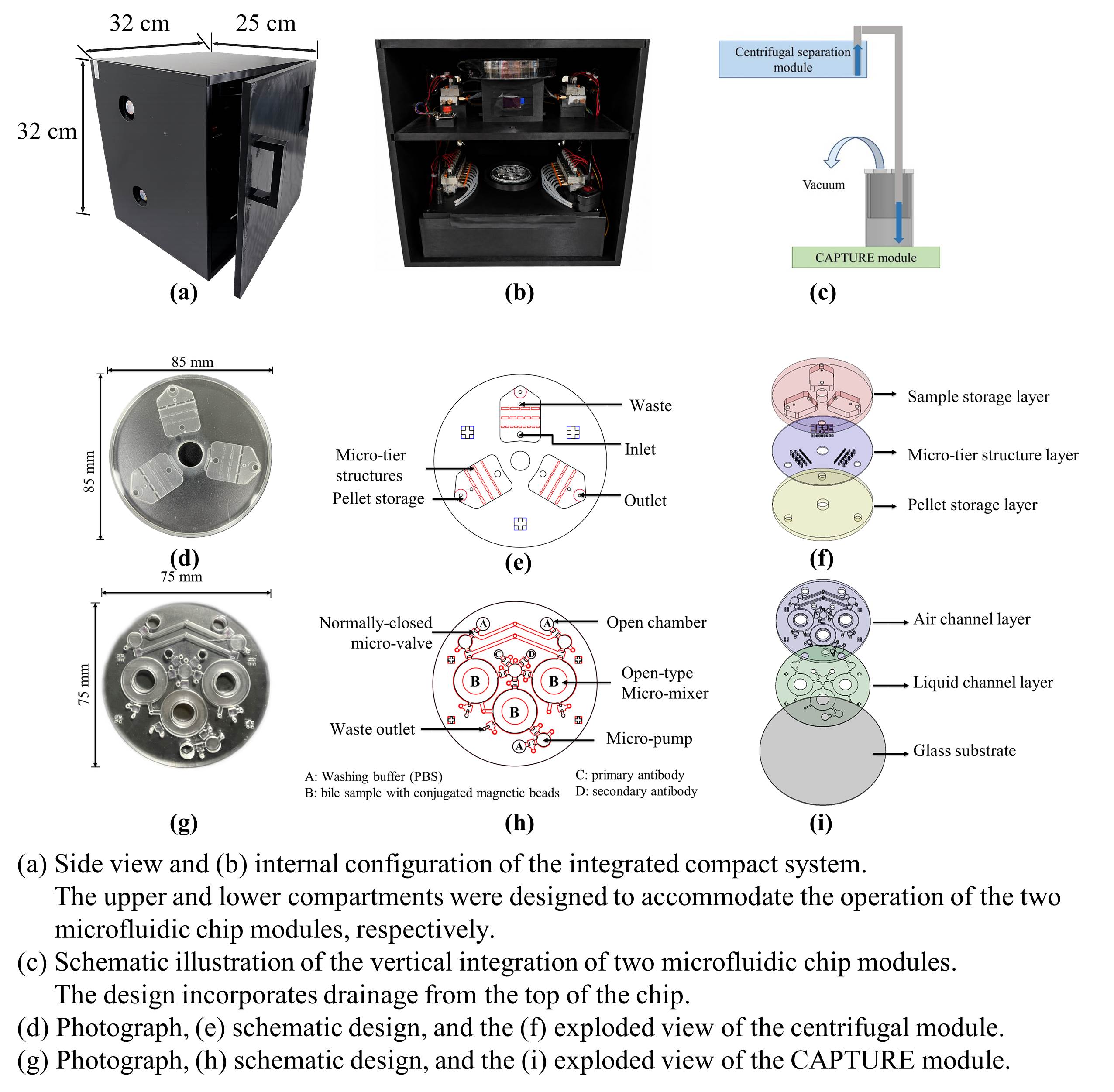
| Summary | The automated microfluidic system enables early cholangiocarcinoma diagnosis using 1 mL bile in 3 hours. Integrating centrifugal and "CAPTURE" module, it uses anti-EpCAM, octasaccharides, and aptamers for triplex cross-validation. An over-100-case clinical single-blind trial achieved 92% accuracy, 93% sensitivity, and 88% specificity. By detecting cancer cells in inflammation-only patients, this low-cost, compact desktop device offers immense commercialization potential and clinical value. |
||
| Scientific Breakthrough | This automated microfluidic system detects cholangiocarcinoma cells in 3 hours using 1 mL bile. It vertically integrates centrifugal and CAPTURE (Cancer Affinity Probe Tracking by immune-Reaction) modules. Using anti-EpCAM, glycosaminoglycans (GAGs), and aptamers for cross-validation, it outperforms miRNA assays. An over-100-case trial showed 92% accuracy, 93% sensitivity, and 88% specificity. Detecting cancer cells in 3 "inflammation-only" patients highlights its potential for early diagnosis. |
||
| Industrial Applicability | To overcome imaging limits in early cholangiocarcinoma detection, we developed an automated microfluidic diagnostic system. An over-100-case single-blind trial achieved 92% accuracy, 93% sensitivity, and 88% specificity, successfully detecting cancer cells in patients previously diagnosed with severe inflammation. Using low-cost PDMS chips, this compact system delivers results in 3 hours. It is ideal for routine hospital health checks, offering immense commercial value for precision health. |
||
- Contact
- Yu-Jie, Huang
- ms114033627@gapp.nthu.edu.tw
other people also saw