

| Technical Name | SpaRSA: A Cross-Scale Spatial Biology-Guided Platform for Liquid Biopsy and Dynamic Metastasis Risk Prediction in Pancreatic Cancer | ||
|---|---|---|---|
| Project Operator | National Cheng Kung University | ||
| Project Host | 沈延盛 | ||
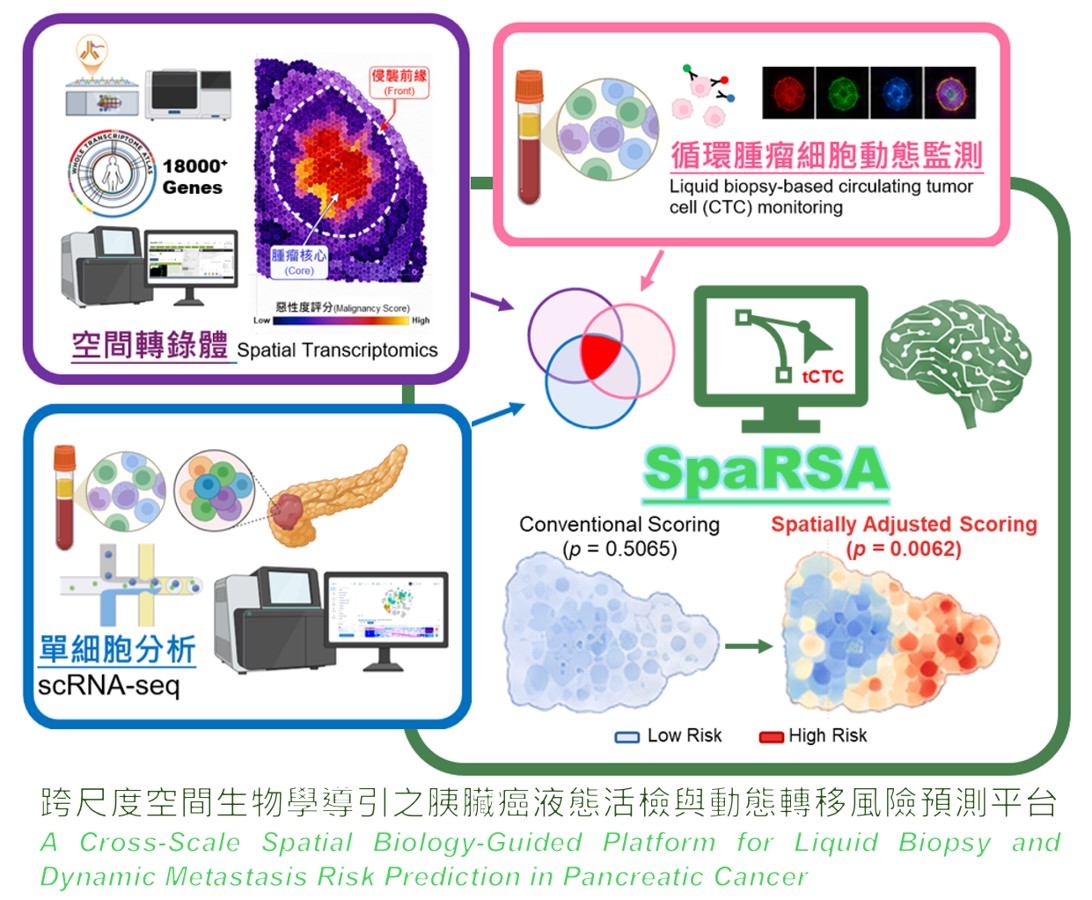
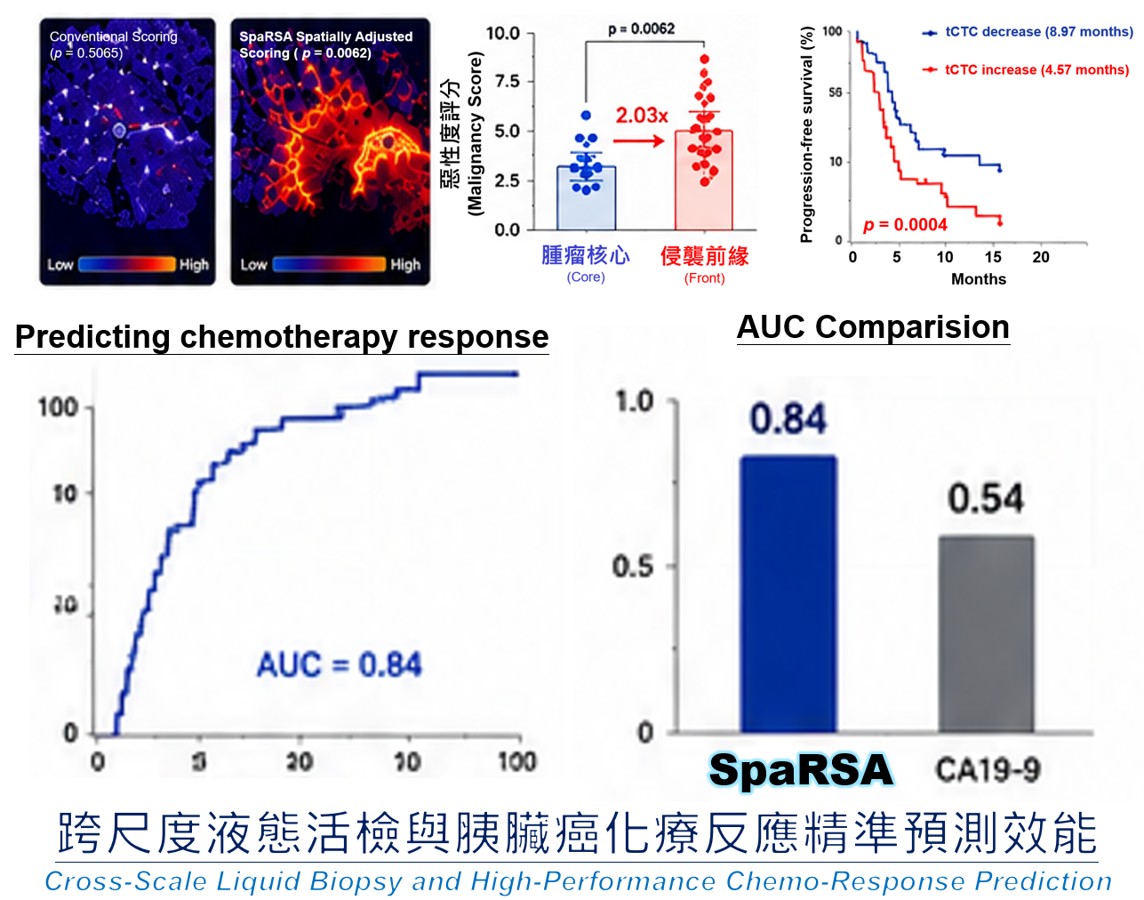
| Summary | This platform integrates spatial biology and liquid biopsy for pancreatic cancer. SpaRSA corrects stromal contamination and identifies invasive front risk signals, achieving AUC=0.8409 for chemotherapy response prediction. The cross-scale framework translates spatial and single-cell signatures into clinically deployable bulk RNA assays. Dynamic CTC monitoring enables early detection of metastasis and MRD (p=0.0092), enabling real-time risk stratification and AI-driven IVD applications. |
||
| Scientific Breakthrough | This platform integrates spatial transcriptomics, single-cell analysis, and CTC monitoring to form a cross-scale precision oncology system for pancreatic cancer. SpaRSA removes stromal contamination to reveal invasive-front risk signals. It enables early metastasis and MRD detection, achieving AUC=0.8409 and outperforming CA19-9 (p=0.0092). Spatial signatures are translated into bulk RNA assays for scalable clinical use, supporting AI-driven diagnostics and IVD applications. |
||
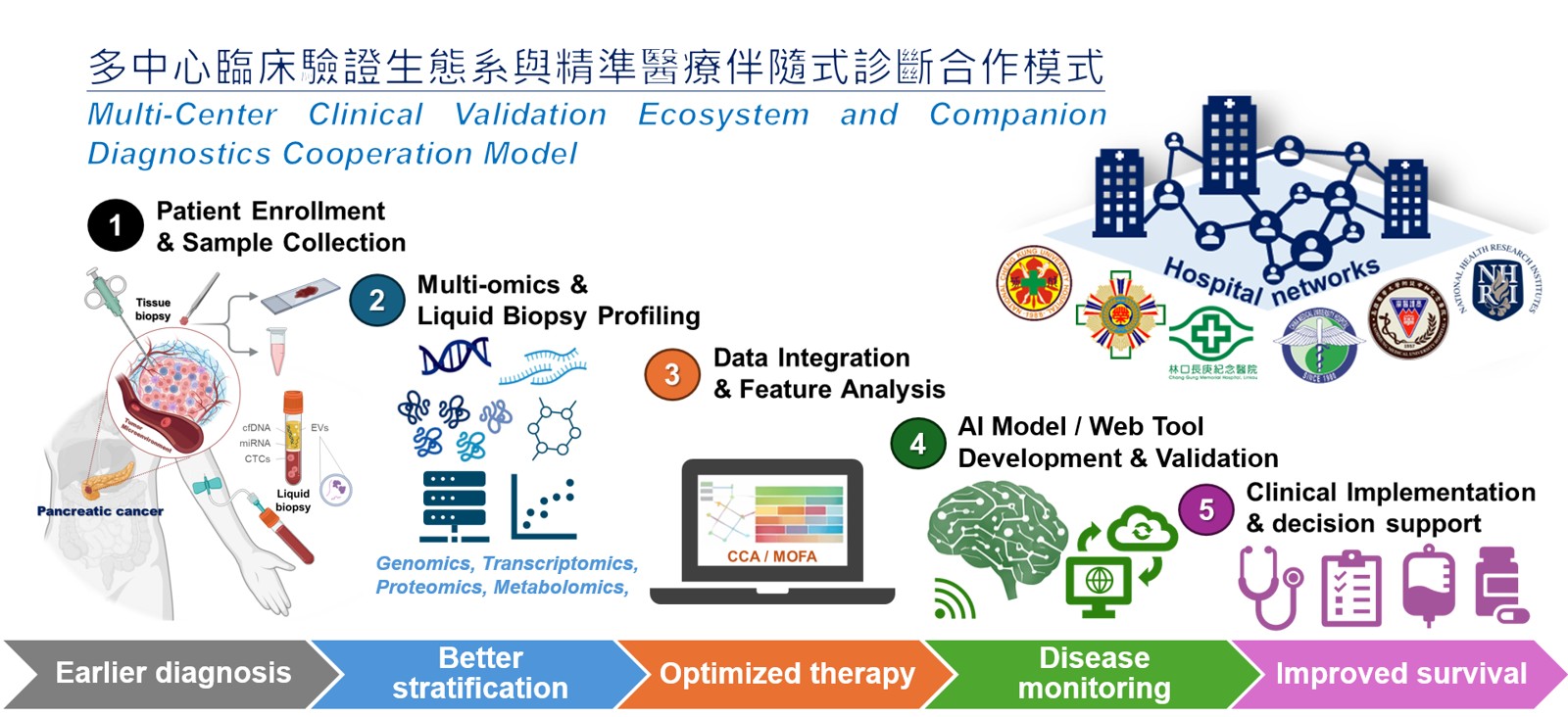
| Industrial Applicability | This platform enables early detection, treatment response assessment, recurrence monitoring, and risk stratification in pancreatic cancer, and is scalable to other heterogeneous solid tumors. Compared with imaging and CA19-9 surveillance, it enables earlier detection of micrometastasis and MRD, improving real-time clinical decision-making. It shows strong potential for AI-assisted diagnostics, IVD and companion diagnostics, supporting clinical translation and commercialization. |
||
- Contact
- Ya-Chin Hou
- yachi2016@yahoo.com.tw
other people also saw